In this article:
When a leak happens, it’s easy to panic. Images of flooding damage may dart through your mind. If water is actively gushing into a room, you could be looking at thousands of dollars in damage unless you act quickly.
You head for the water shut-off valve…
…if you can remember where it is.
As a homeowner, it’s critical to know where the shut-off valves are located, even if they are not in the most obvious places.
At First Call, we offer prompt, honest service with no shortcuts. We take our commitment to our clients and to our community seriously; we are among only 5% of the restoration companies in North Carolina that require drug testing for employees. This is because we want to do more than merely fix your problem. We want to treat your home and your family with the highest level of respect. If you’ve had water damage and need remediation, please contact us for an assessment.
Where Are Water Shut-Off Valves Typically Located?
There are three common locations for water shut-off valves. We’ll explore each one of them.
Location #1: Inside the Home — Basement, Utility Room, or Crawl Space
You’ll find these most often in colder climates, where the location helps keep pipes from freezing. The valves to shut off the water are typically found along the front foundation wall because this is where the main line enters.
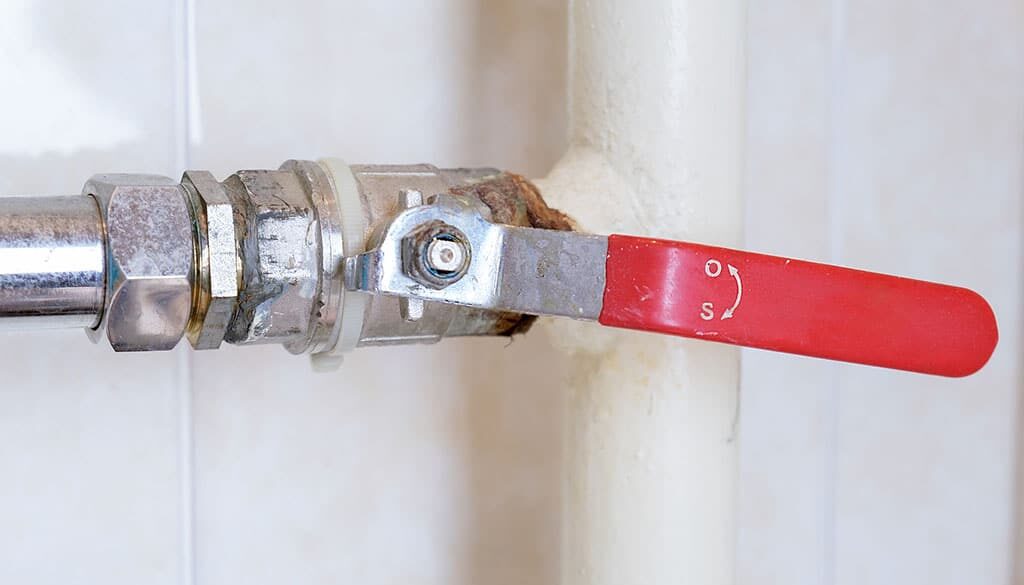
It may be near a water heater or even a pressure regulator. You’ll notice it because it will often look for a wheel-style gate valve or even a lever-style ball valve.
When you locate it, we highly recommend labeling it clearly so you can easily find it in case of an emergency.
Location #2: Outside the Home — Near the Foundation or Exterior Wall
In warmer climates, where pipes typically don’t need to be protected from frost, you may find these water shut-off valves outside the house. They may be housed inside a metal or plastic cover box that is flush with the ground or wall.
When you find this valve, be sure you keep the area around it free from debris and easily accessible.
Location #3: At the Street — The Water Meter Box
First, let’s be clear: This is the utility shut-off. It is not merely controlled by the homeowner. It’s also controlled by the water company. You cannot access this shut-off without a special tool. Most municipalities require you to contact them before accessing this.
This should only be used if the interior valves fail. Be sure you know your municipality’s rules and regulations about accessing this shut-off valve.
What Fixtures and Appliances Have Their Own Shut-Off Valve?
Some appliances have their own shut-off valves, making it easier and more convenient to shut off the water.
Following is a useful table to help you:
|
Fixture/Appliance |
Typical Valve Location |
|
Toilets |
Behind/below the tank, on the wall |
|
Kitchen sink |
Inside the cabinet under the sink |
|
Bathroom sink |
Inside the vanity cabinet |
|
Washing machine |
Behind the unit on the wall |
|
Dishwasher |
Under the kitchen sink |
What Should You Do After Shutting Off the Water?
There are several steps you should take after shutting off the water. Once you shut off the valve, be sure to:
- Release the pressure in the lines by turning on a faucet at the lowest point in your home to drain the remaining water.
- Identify what is causing the leak.
- Take photos or video to document the damage for insurance purposes.
- Contact your insurance company and report the claim in a timely manner.
- Contact professionals like a licensed plumber.
- Dry out the area quickly. You may use fans or dehumidifiers.
- If there was extensive water leakage, make the right call and contact First Call so we can do an assessment. To minimize the chances of mold growth and extensive damage, it’s critical to speak to us as soon as possible.
How Often Should You Test Your Water Shut-Off Valve?
It’s a good idea to check the water shut-off valve twice a year. This is critical because when valves aren’t touched for years, they can corrode or seize.
Testing a water shut-off valve is simple and straightforward. Simply:
- Locate the valve
- Slowly turn it clockwise to close
- Turn on a faucet to confirm water stops flowing
- Slowly reopen the valve counterclockwise
- Check for any dripping around the valve stem after reopening
What Are the Signs That a Valve Needs to Be Replaced?
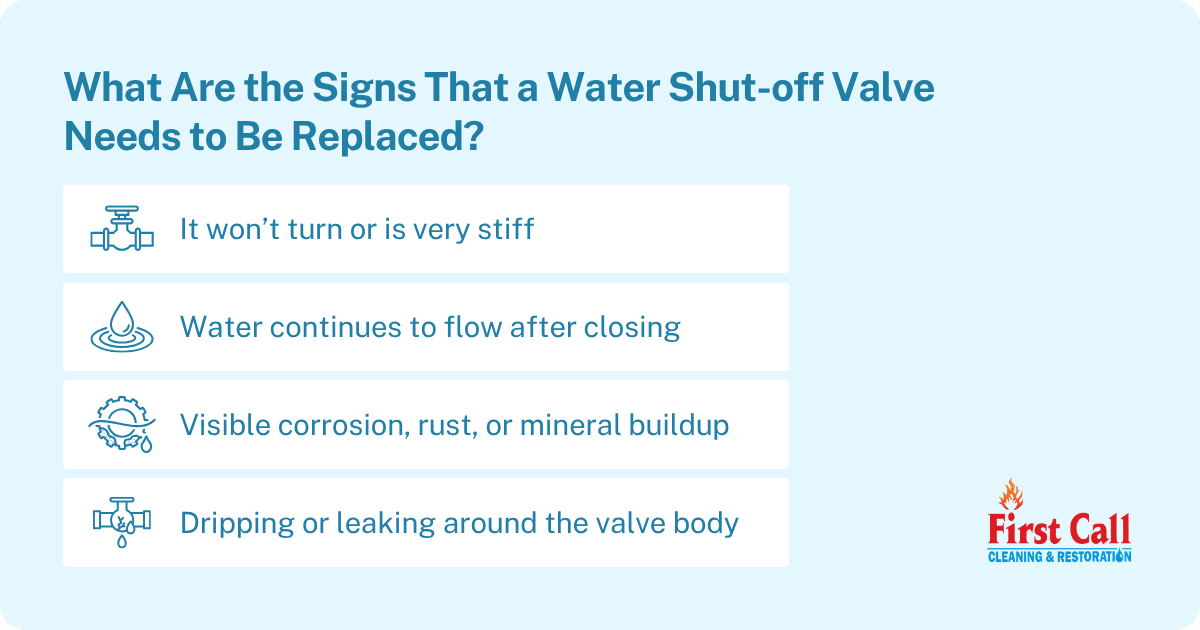
If your valve is demonstrating the following signs, you should consider replacing it.
- It won’t turn or is very stiff
- Water continues to flow after closing
- Visible corrosion, rust, or mineral buildup
- Dripping or leaking around the valve body
Make First Call the Right Call for Handling Your Water Damage Restoration Needs
Since 1989, we’ve served the greater Greensboro, Burlington, and Triangle communities. We’re family-owned and operated, so we know the importance of customer service and keeping promises.
When you’ve experienced a water leak, you’re already under a tremendous amount of stress. Let us help take that anxiety off you by providing quality service you can rely upon. For services you can trust, make First Call the right call.
Key Takeaways
- Knowing where your water shut-off valve is located before an emergency occurs can save you thousands of dollars in water damage.
- The three most common locations for a main shut-off valve are inside the home (basement, utility room, or crawl space), outside near the foundation, and at the street meter box.
- The street meter box shut-off is a utility valve controlled by both the homeowner and the water company, and most municipalities require you to contact them before accessing it.
- Many individual fixtures and appliances — including toilets, sinks, washing machines, and dishwashers — have their own dedicated shut-off valves.
- After shutting off the water, your immediate priorities are releasing line pressure, documenting the damage, contacting your insurance company, and calling a professional.
- Acting quickly to dry out a water-damaged area is critical, as delayed action significantly increases the risk of mold growth.
- Experts recommend testing your water shut-off valve twice a year to prevent corrosion and ensure it will work when you need it most.
- A valve that is stiff, leaking, corroded, or fails to stop water flow when closed should be replaced as soon as possible.
- Labeling your shut-off valves and keeping the surrounding areas clear and accessible are simple steps that can make a major difference in an emergency.
=====
Sources:
Everlasting Valve Company, “How Often Should Shut-Off Valves Be Replaced?” https://www.everlastingvalveusa.com/how-often-should-shut-off-valves-be-replaced/
The Home Depot, “How to Turn Off the Water to Your House,” https://www.homedepot.com/c/ah/how-to-turn-off-the-water-to-your-house/9ba683603be9fa5395fab9017ab28c8a