In this article:
No one wants water damage. But if it happens to you, it’s critical that you understand precisely which actions to take and the type of water that has invaded your home.
Not all water damage is alike. Each category of water damage has its own remediation protocol, and understanding this can make a difference in determining when it is safe to return to your home.
In this article, we’ll take a closer look at these categories of water damage, how they are handled and what to do if your home is affected.
First Call has been a dedicated member of the community since 1989, offering complete cleaning and restoration services. From hospital-grade environmental cleaning to water damage restoration and air quality testing, we help ensure your environment is the safest and healthiest possible. If you need us, First Call is always the right call. Contact us today for peace of mind knowing you’re in good hands.
How Is Water Damage Categorized? Examining the 3 Categories of Water Damage
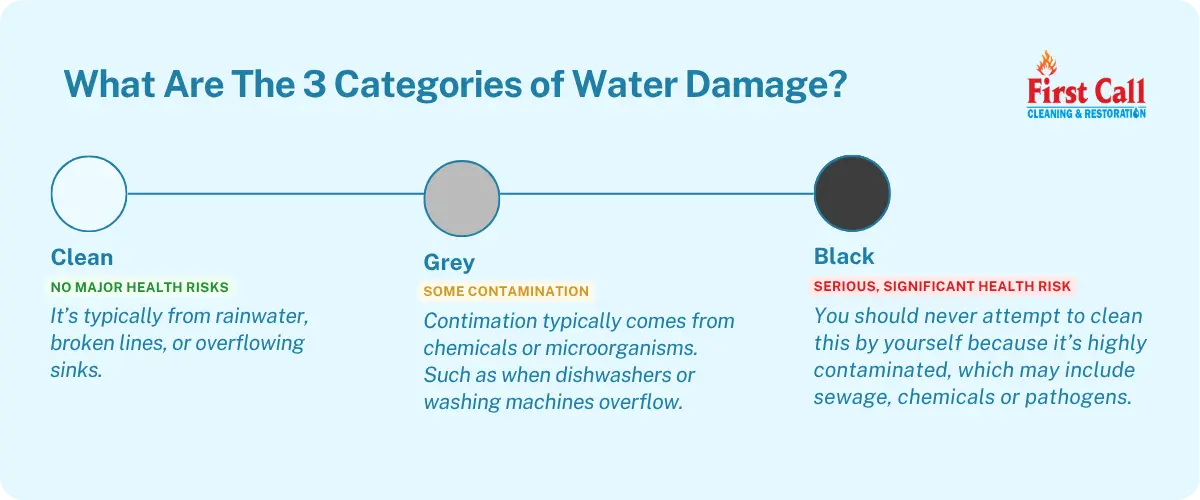
There are three main categories of water damage: clean water, gray water, and black water. We’ll take a closer look at each of them.
Category 1: Clean Water
As its name indicates, clean water does not pose major health risks. It’s typically from rainwater, broken lines, or overflowing sinks. While it may not cause immediate danger, if it’s untreated it can lead to other problems such as mold and even transform into one of the more severe categories of water damage.
If you experience a leak of clean water, it’s crucial to shut off the water source immediately and begin drying. Failure to do so could lead to extensive mold growth.
Category 2: Gray Water
When water damage is gray, it does have some contamination, typically from chemicals or microorganisms. Examples include when appliances such as dishwashers or washing machines overflow. Backed up toilets—provided there is no solid waste— are other examples of gray water.
Although the contamination is not as serious as black water, you should still use extreme caution, as the water is full of pollutants. This is why it’s so vital to seek help from the professionals at First Call.
Why should you call the pros? Because there’s a significant risk of sickness if you’re exposed. When we deal with gray water, we use protective gear and make sure all surfaces are clean and disinfected. Even a small area has the potential to cause sickness if you’re exposed.
Category 3: Black Water
If you have black water, you have a serious, significant health risk. This is the most severe category of water damage. You should never attempt to clean this by yourself because it’s highly contaminated, which may include sewage, chemicals or pathogens.
Floodwaters, sewage backups and natural disasters can all set the stage for black water contamination.
Professional assistance is essential; there are several hazardous material considerations involved when cleaning up black water, so you should not touch it or clean it up.
What Are Common Causes for Each Water Damage Category?
Clean Water
Clean water leaks can be caused by:
- Broken appliances
- Overflowing sinks/tubs
- Leaking roofs
- Broken supply lines
- Leaking pipes
Gray Water
Gray water leaks can be caused by:
- Malfunctioning appliances
- Washing machines
- Dishwaters
- Failing sump pumps
- Overflowing sinks
- Overflowing toilets (as long as there isn’t any heavy, solid sewage)
Black Water
Black water leads can be caused by:
- Sewage backups
- Broken pipes
- Toilets overflowing with water containing feces
- Flood water
- Failing septic systems
What Type of Restoration Is Required for Each Category?
Clean Water Restoration
While clean water isn’t contaminated, this doesn’t mean that it’s a simple DIY process. Failure to ensure that every bit of moisture is eliminated can set the stage for a mold infestation, which will require
Restoration involves:
- The use of wet vacuums and pumps to extract water
- Utilizing air movers and dehumidifiers to accelerate the drying process
But what many may not realize is that water remediation companies like First Call also carefully monitor the moisture level to ensure everything is fully dry, and may even conduct minor repairs if the materials are swollen or warped.
Gray Water Restoration
Gray water is contaminated, so you need to call the pros. Improperly handling gray water restoration means you could spread contamination throughout your home, placing the safety of your family at risk.
In addition to the full water extraction, thorough cleaning involving antimicrobial treatment is required—and this includes removal of porous materials that can’t be fully cleaned, such as carpet padding or drywall.
Gray water contamination means that disinfection is required.
Black Water Restoration
To be clear: Professional remediation is always required when black water is involved.
In addition, specialized personal protective equipment—as well as specific containment procedures—are needed. At First Call, when we’re dealing with black water damage, our first priority is the health of your family and your home. That’s why we are extremely thorough and follow all state and federal requirements for eliminating black water damage.
Because black water is so highly contaminated, remediation includes:
- Completely removing any porous materials such as drywall or even flooring
- Intense disinfecting of all surfaces is critical to avoid any potential health hazards
- Air scrubbing and deodorizing
Water Damage? Don’t Risk Further Contamination—Make the Right Call With First Call
Since 1989, our family-owned and operated company has consistently upheld our values of honesty and fairness before profit. This means you can rest assured that you’ll receive an honest, reliable quote and the highest level of service.
When you’re dealing with contamination, the details can be overwhelming and stressful. You’ve got enough worries. Your remediation services shouldn’t be one of them. Discover why customers across the Burlington area trust First Call. Contact us today.
Key Takeaways
- Water damage is categorized into three types—clean water, gray water, and black water—each requiring a different level of remediation.
- Understanding the category of water damage is critical to determining health risks and the proper restoration approach.
- Clean water damage poses minimal immediate health risks but can lead to mold growth if not dried thoroughly and promptly.
- Gray water contains contaminants and microorganisms, making professional remediation essential to prevent illness and cross-contamination.
- Black water is highly hazardous, often containing sewage, chemicals, or pathogens, and always requires professional cleanup.
- Common sources of clean water damage include leaking pipes, broken appliances, and overflowing sinks or tubs.
- Gray water damage is frequently caused by appliance malfunctions, backed-up toilets without solid waste, and failing sump pumps.
- Black water damage commonly results from sewage backups, flooding, septic system failures, or toilet overflows with waste.
- Proper restoration includes water extraction, drying, moisture monitoring, and repairs to prevent long-term damage.
- Gray and black water remediation requires disinfection, removal of contaminated porous materials, and strict safety protocols.
- Attempting DIY cleanup for contaminated water can spread pollutants and pose serious health risks.
- Prompt professional intervention minimizes damage, protects occupant health, and restores a safe living environment.
=====
Sources:
International Facility Management Association, “Water Damage 101: Understanding the Basics of Water Damage,” https://ifmacap.starchapter.com/blog/Water_Damage_101__Understanding_the_Basics_of_Water_Damage